
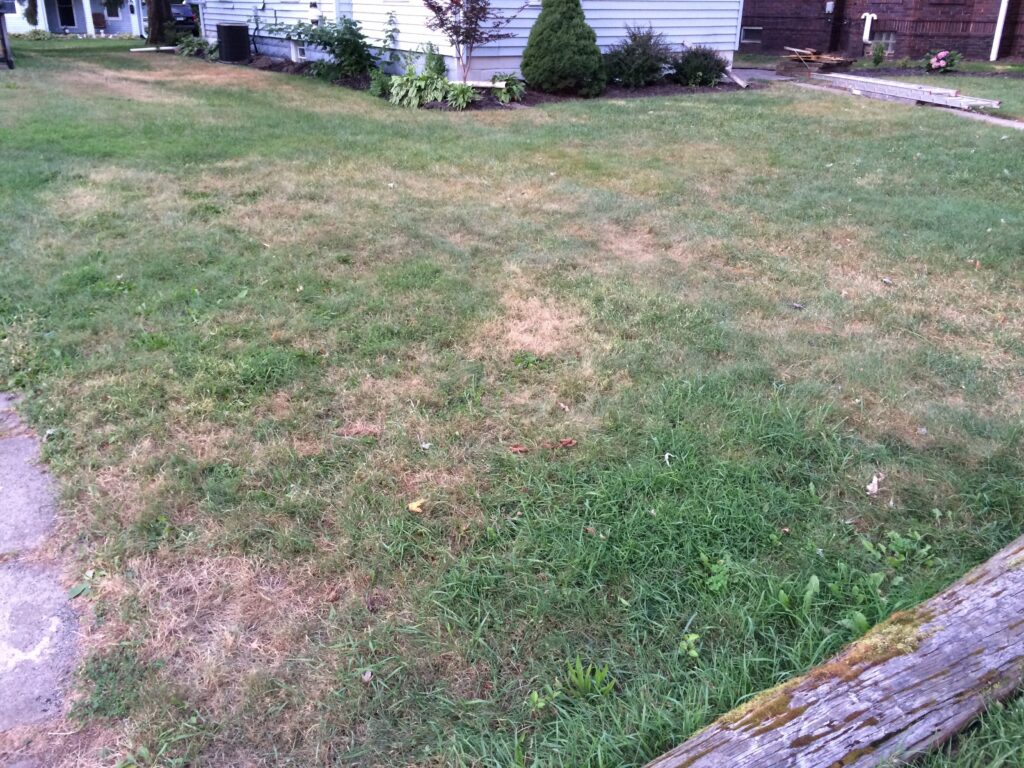
One day your lawn is lush, thick, and green. Then, seemingly overnight, brown patches begin appearing, the grass starts thinning, and areas that looked perfectly healthy suddenly seem dry, faded, or even dead.
If you’re wondering what happened, you’re not alone.
Every summer, homeowners throughout Northeast Ohio ask us the same question:
“Why is my lawn turning brown?”
After more than 45 years of caring for lawns across Northeast Ohio, we’ve learned there’s rarely a one-size-fits-all answer.
While heat and drought stress are common culprits, insects, lawn diseases, watering habits, mowing practices, and soil conditions can all produce similar symptoms. The challenge is that many of these issues look almost identical at first glance—even though each requires a different solution.
That’s why the first step isn’t treating the brown grass.
It’s identifying what’s causing it.
Brown Grass Is a Symptom, Not a Diagnosis
Think of your lawn like your vehicle.
When the check engine light comes on, it doesn’t tell you exactly what’s wrong—it simply tells you something needs attention.
Brown grass works the same way.
Healthy turf loses its rich green color whenever it’s under stress. From the curb, many lawn problems look nearly identical. Beneath the surface, however, they can have very different causes.
At Grass Master, one of the biggest misconceptions we see is homeowners assuming every brown lawn simply needs more water. In reality, successful lawn care starts with understanding why your lawn is struggling before deciding how to treat it.
What Could Be Causing Your Brown Lawn?
The chart below highlights some of the most common causes of brown lawns in Northeast Ohio and the clues that may help you narrow them down.
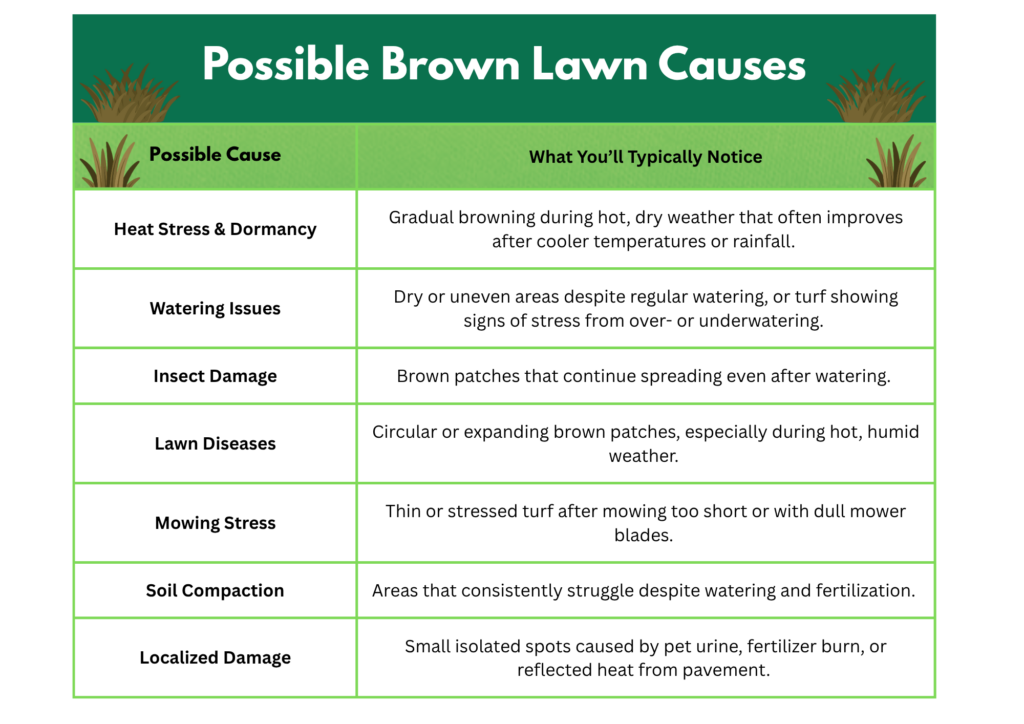
While this chart can help point you in the right direction, many of these issues share similar symptoms. The next step is taking a closer look at what your lawn is telling you.
Start Here: Questions to Ask About Your Lawn
Before reaching for fertilizer, insect control, or turning on the sprinkler, take a few minutes to evaluate what’s happening.
Ask yourself:
- Has Northeast Ohio experienced an extended period of hot, dry weather?
- Am I watering deeply and consistently?
- Is the damage widespread or limited to certain areas?
- Are the brown patches getting larger?
- Does the grass pull up easily from the soil?
- Have I noticed birds, skunks, raccoons, or other wildlife digging in my lawn?
The answers to these questions can help narrow down the possibilities and determine whether you’re dealing with seasonal stress or a more serious underlying issue.
What Comes Next?
If you’ve narrowed down the possibilities but still aren’t sure what’s causing the problem, don’t rush into treatment.
Many summer lawn problems look alike, but they require completely different solutions. Applying the wrong product or making the wrong adjustment can waste time, money, and delay your lawn’s recovery.
In the next article in our Summer Lawn Survival Series, we’ll take a closer look at one of the biggest challenges homeowners face:
“Grubs, Disease, or Drought? How to Tell the Difference”
We’ll walk through the telltale signs of each so you know what to look for before deciding on the right treatment.
Continue Reading: Grubs, Disease, or Drought? How to Tell the Difference
Need Help Diagnosing Your Lawn?
Sometimes the clues point to an obvious answer. Other times, several different issues may be affecting your lawn at the same time.
That’s where experience makes the difference.
For more than 45 years, Grass Master has helped Northeast Ohio homeowners identify the root cause of lawn problems before recommending treatment. Rather than guessing, we take the time to evaluate what’s happening beneath the surface so you can move forward with confidence.
If your lawn isn’t recovering—or you’re simply not sure what’s causing the problem—contact Grass Master today to schedule a professional lawn evaluation.
