
When brown patches appear during summer, it’s easy to blame drought. You water more, wait for improvement, but certain areas keep getting worse. If that sounds familiar, another culprit may be hiding beneath the surface.
Lawn grubs.
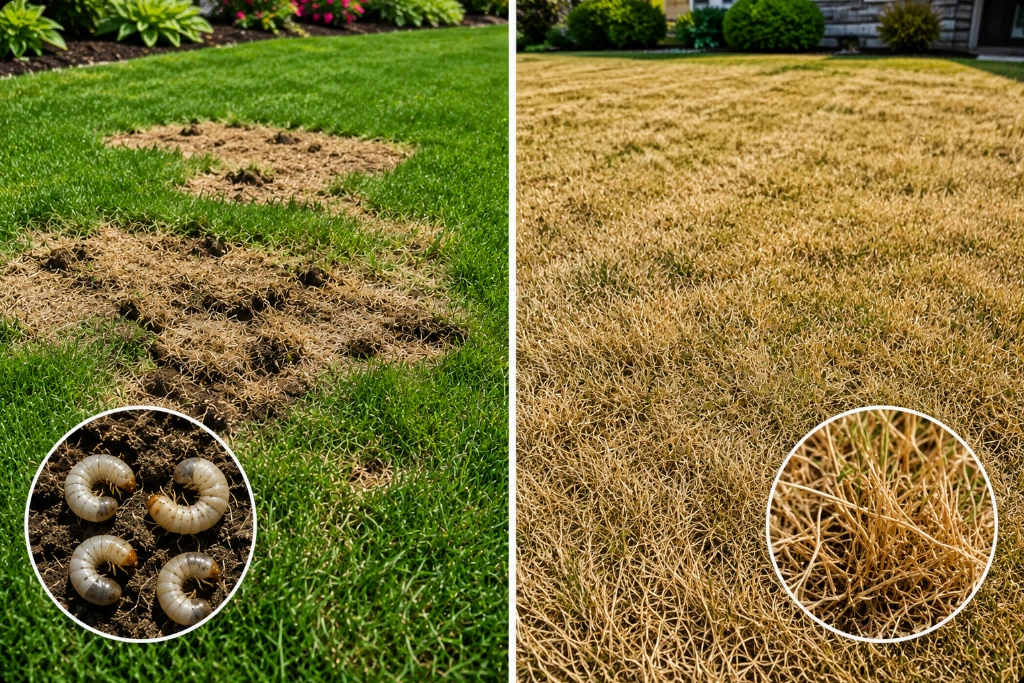
Grub damage and drought stress can look remarkably similar. Both can cause brown, thinning, or dying areas of turf, but the solutions are very different. While a drought-stressed lawn may recover with consistent moisture, watering won’t fix a significant grub problem.
Grass Master helps homeowners across Northeast Ohio identify whether grub damage or drought stress is causing lawn decline, so the right treatment can begin before damage spreads.
Grub Damage vs. Drought Stress: What to Look For
Although grub damage and a drought-damaged lawn may look the same, there are some differences that can help you tell them apart.
Pattern and Appearance of the Damage
Drought stress often affects larger, more uniform areas of the lawn, especially where grass receives the most sun or the least water. The lawn may appear faded, gray-green, or uniformly brown.
Grub damage often begins as small, irregular brown patches that gradually expand as grubs continue feeding on the turf’s roots.
While these patterns provide helpful clues, appearance alone isn’t enough for accurate diagnosis.
Response to Watering
A drought-stressed lawn may improve with consistent, appropriate moisture, as long as the turf has not suffered permanent damage.
A grub-infested lawn may not respond to watering because the damaged root system cannot effectively absorb moisture.
One of the strongest indicators of grub damage is a section of lawn that continues to decline despite adequate watering.
The Tug Test
For further evidence of a grub infestation, you can perform the tug test.
Gently pull upward on a small clump of grass. Healthy grass with an intact root system should remain firmly attached to the soil. Turf with severe root damage may pull away much more easily because much of the root system has been eaten away.
Checking Below the Turf
If you have lawn grubs, you may see white, C-shaped larvae beneath the turf. However, simply finding one grub does not necessarily mean grubs are responsible for your lawn damage. The number of grubs, the condition of the roots, and overall turf health should all be considered.
Lawn care professionals can inspect the soil and root zone beneath damaged turf to determine whether grubs are present and whether their population is high enough to cause meaningful damage.
Animal Activity
If you notice birds, skunks, raccoons, and other animals digging or foraging, they may be detecting soil insects beneath the surface.
Could those insects be lawn-damaging grubs? Only an inspection from your lawn care professionals can make that ruling, but this is another sign to consider.
No single sign confirms grub damage or drought stress. Looking at turf condition, root condition, recent weather, and what’s happening beneath the surface provides the clearest answer.
| Grub Damage | Drought Stress |
| Irregular patches | More uniform areas |
| Grass pulls up easily | Grass stays rooted |
| Doesn’t improve with watering | Often improves |
| Root damage | Moisture shortage |
| Wildlife may dig | Usually no animal activity |
The Proof is in the Inspection
The only way to know for sure whether your lawn damage is caused by grubs, drought stress, or another issue is through proper inspection. Contact Grass Master if:
- Brown patches continue spreading despite watering.
- Your grass pulls up easily.
- Wildlife has started digging in your lawn.
- You’re unsure what’s causing the damage.
Grub Damage vs. Drought Stress FAQs
Can grub damage and drought stress occur simultaneously?
Yes. In fact, drought stress and grub damage can make each other worse. Grubs weaken the root system, making it harder for the grass to absorb water during hot, dry weather. At the same time, drought-stressed grass is less resilient and may struggle to recover from root damage. This is why a proper diagnosis is important before deciding on treatment.
Will grass damaged by grubs grow back?
It depends on the severity of the damage. Grass with minor root damage may recover once the grubs are controlled and growing conditions improve. However, areas with extensive root loss may require overseeding or other lawn repair services to restore healthy turf. The sooner grub damage is identified, the better the chances of recovery.
When are grubs most likely to damage lawns in Ohio?
In Northeast Ohio, grub damage is most common from late summer through early fall as young grubs actively feed on grass roots. Damage may also become apparent in spring if grubs survived the winter and resumed feeding before maturing. The exact timing can vary depending on weather conditions and the grub species.
How do lawn care professionals check for grubs?
A lawn care professional will inspect both the turf and the soil beneath it. This may include checking how firmly the grass is rooted, examining the condition of the root system, and looking beneath the turf for white, C-shaped grubs. Finding a few grubs isn’t necessarily cause for concern, so professionals also evaluate the number of grubs present, the extent of root damage, and the overall health of the lawn before recommending treatment.
How long does it take to treat grub damage?
The timeline for successful grub control depends on the severity of the infestation and the extent of the damage. Once the grubs are effectively treated, the grass can begin recovering if the root system is still healthy and growing conditions are favorable. Lawns with significant root damage may require overseeding or other repairs to fully restore the affected areas. Grass Master can evaluate your lawn and recommend the most effective treatment and recovery plan.
Are grubs a recurring lawn problem?
They can be. Adult beetles lay eggs in lawns each year, so new grubs can develop even if your lawn was treated previously. Not every lawn experiences damaging infestations every year, but properties with a history of grub problems may benefit from regular monitoring or preventive treatments. Grass Master can help determine whether preventive grub control is appropriate for your lawn based on its condition and previous history.
Grub damage or drought stress? Let Grass Master Decide
If you’re unsure whether you’re dealing with drought stress, grubs, or another lawn issue, Grass Master can help identify the cause and recommend the right solution.
Request a free quote based on your yard size and take the first step toward restoring a healthy lawn.
