
By late summer, many homeowners look out at their lawn and assume the worst.
Thin grass. Bare patches. Weeds creeping into open spaces. A lawn that looked lush in the spring suddenly feels tired, worn out, and beyond repair.
It’s easy to wonder: “Do I need to start over?”
Fortunately, in most cases, the answer is no.
Many Ohio lawns don’t need a complete renovation—they simply need help recovering from the stress of summer. That’s where overseeding comes in.
Rather than tearing out your existing lawn and starting from scratch, overseeding introduces healthy new grass into thin or damaged areas, helping restore density, improve appearance, and build a stronger lawn over time.
When performed during the ideal fall growing season—and often paired with core aeration—overseeding can help your lawn recover naturally and come back thicker, greener, and healthier the following spring.
At a Glance: Can Overseeding Help Your Lawn?
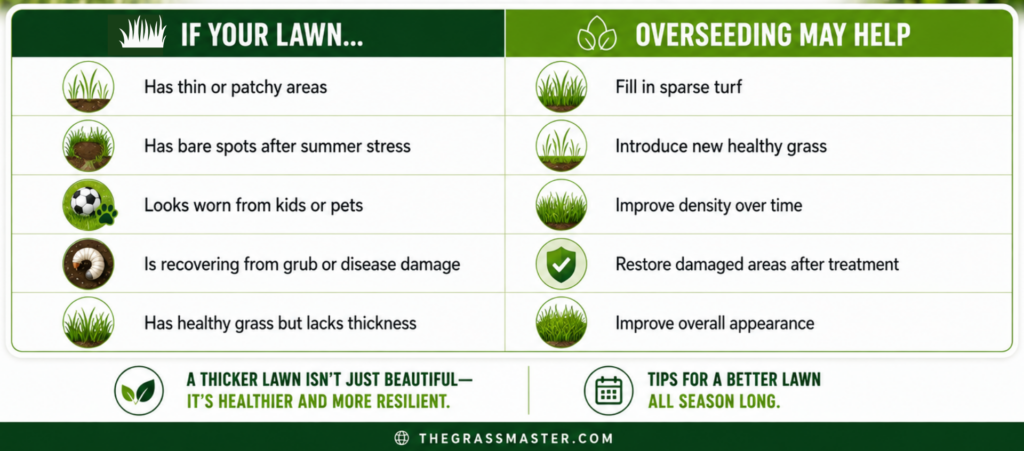
Important: Overseeding works best after the underlying cause of the damage has been addressed. If you’re unsure why your lawn is struggling, start with our guide to diagnosing summer lawn problems.
Why Lawns Become Thin After Summer
Most lawns in Northeast Ohio consist of cool-season grasses like Kentucky bluegrass, perennial ryegrass, and tall fescue. These grasses naturally slow their growth during hot summer weather, making them more susceptible to thinning and stress.
A lawn may lose density because of:
- Heat and drought stress
- Heavy foot traffic
- Pets and backyard activities
- Grub damage
- Lawn diseases
- Soil compaction
While each of these problems affects the lawn differently, they often have one thing in common: They leave behind thin or bare areas where healthy grass once grew.
Fortunately, that doesn’t necessarily mean you need a brand-new lawn.
Overseeding vs. Starting Over
One of the biggest misconceptions homeowners have is that a thin lawn automatically needs to be replaced.
In reality, many lawns still have a healthy foundation.
If much of your existing grass is healthy, overseeding can strengthen what’s already there by introducing new grass into weak or damaged areas.
Overseeding is often the right choice when:
- Most of the lawn is still alive
- You have scattered thin or bare areas
- Summer stress has reduced lawn density
- Previous grub or disease damage has been treated
- You simply want a thicker lawn
A complete lawn renovation is typically reserved for lawns with widespread death, severe weed infestations, or extensive long-term damage.
What Is Overseeding?
Overseeding is the process of spreading new grass seed into an existing lawn without removing the healthy grass that’s already there.
Instead of replacing your lawn, overseeding builds upon it.
Benefits include:
- Filling in thin and patchy areas
- Creating a fuller, thicker lawn
- Reducing opportunities for weeds
- Introducing improved grass varieties
- Increasing drought tolerance
- Improving overall appearance
Many homeowners are surprised to learn that today’s grass varieties often perform better than those planted 15 or 20 years ago, offering improved disease resistance, drought tolerance, and overall durability.
Why Fall Is the Best Time to Overseed
Late summer through early fall gives new grass the greatest opportunity to establish.
Why?
- Warm soil promotes quick germination.
- Cooler air reduces stress on seedlings.
- Fall rainfall provides more consistent moisture.
- Weed competition begins to decline.
This combination allows new grass to establish strong roots before winter, setting the stage for a healthier lawn the following spring.
Why Aeration Makes Overseeding Even Better
Healthy seeds need healthy soil.
Core aeration creates thousands of small openings that improve seed-to-soil contact while relieving soil compaction. That means, new seeds have a much better chance of germinating and establishing strong roots.
For that reason, Grass Master often recommends pairing overseeding with core aeration for the best possible results.
Learn more about why late summer is the best time to aerate your lawn.
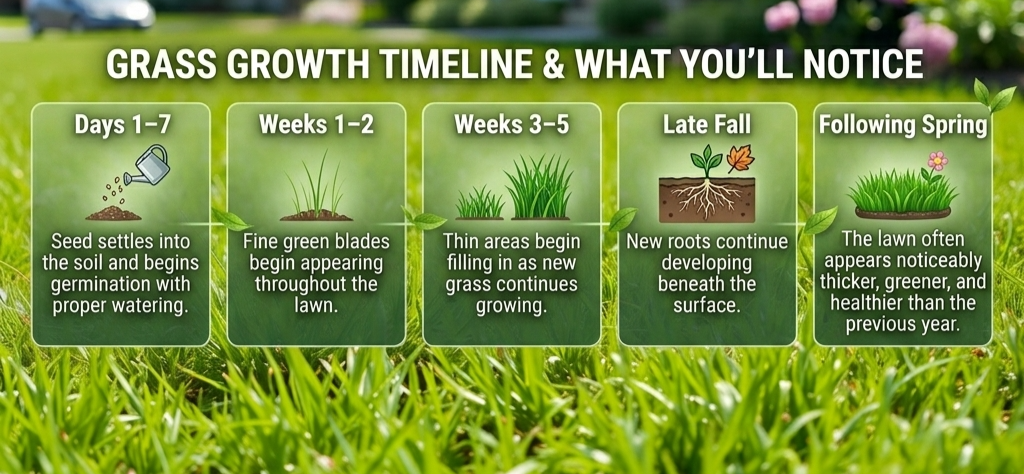
What Results Can You Expect?
Overseeding isn’t an overnight transformation—but homeowners often notice steady improvement throughout the fall.
How to Protect Your Newly Overseeded Lawn
A little extra care during the first few weeks can make a big difference.
Water consistently.
New seed needs consistent moisture until it becomes established.
Wait before mowing.
Allow the new grass to reach the recommended mowing height before its first cut.
Limit heavy traffic.
Kids, pets, and backyard activities are part of everyday life, but minimizing heavy use during the first couple of weeks helps protect young seedlings.
Hold off on weed control.
Some weed control products can interfere with seed germination. If you’re enrolled in a professional lawn care program, your provider can recommend the appropriate timing.
Frequently Asked Questions
Can overseeding help with bare spots?
Yes. Once the underlying cause of bare spots has been addressed, overseeding can introduce new grass into thin or damaged areas and help improve lawn density over time.
Can I overseed without aerating?
Yes, but pairing overseeding with core aeration often produces better results because it improves seed-to-soil contact.
How long before I can use my lawn?
Light foot traffic is generally fine, but it’s best to limit heavy activity until the new grass has had time to establish.
Will overseeding get rid of weeds?
Not directly. However, a thicker lawn naturally leaves less room for weeds to establish.
Does every lawn need overseeding?
Not necessarily. Many homeowners benefit from overseeding every few years, while lawns with recurring thinning, heavy wear, or pet activity may benefit more frequently.
Give Your Lawn a Fresh Start This Fall
A thin lawn doesn’t always mean starting over.
In many cases, overseeding is a simple, cost-effective way to restore density, repair summer damage, and strengthen your lawn for the future. When paired with core aeration, it creates the ideal conditions for healthy new grass to establish and thrive.
At Grass Master, we’ve helped Northeast Ohio homeowners restore healthier lawns for more than 45 years. Our overseeding and core aeration services are tailored to the region’s unique soils, climate, and cool-season grasses, giving your lawn the best opportunity for long-term success.
If your lawn looks thinner than it should after summer, now is the perfect time to help it recover. Request your instant personalized quote today and see how professional overseeding can bring your lawn back stronger than ever.
