
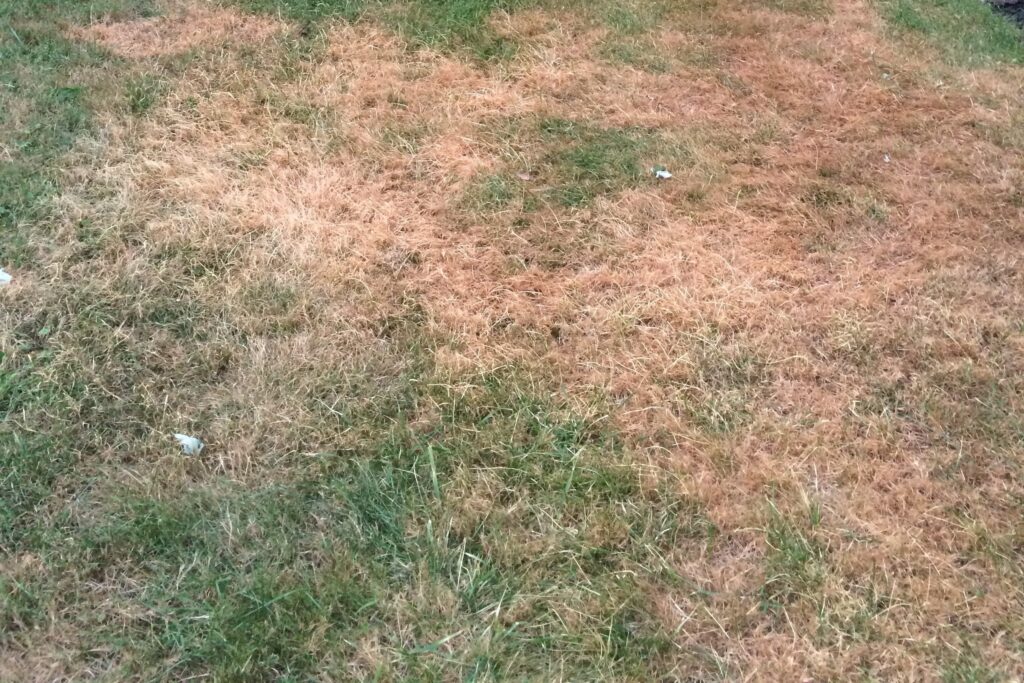
How to help your lawn recover—and prevent future damage.
If you’ve been following along with our Summer Lawn Survival Series, you’ve already learned two important lessons:
- Brown grass is a symptom—not a diagnosis.
- The first step to recovery is identifying what’s actually causing the problem.
Now it’s time to talk about what comes next.
One of the biggest misconceptions homeowners have is that every brown lawn needs more water. While watering is an important part of lawn care, it’s only one piece of helping your lawn recover. In fact, if your lawn is brown because of grubs, disease, or another underlying issue, watering alone won’t solve the problem—and in some cases, it can even make things worse.
A healthy lawn recovers because all of its needs are being met. Proper watering, mowing, soil health, nutrition, and addressing the underlying cause all work together to help grass bounce back from summer stress.
Use the checklist below to help your lawn recover now and reduce the chances of future summer lawn problems.
| Recovery Priority | Why It Matters |
| Address the underlying cause first | Recovery starts by solving the actual problem—not just treating the symptoms. |
| Water the right way | Deep, consistent watering supports recovery but isn’t a cure-all. |
| Reduce additional stress | Proper mowing and sharp blades help weakened grass recover. |
| Strengthen your lawn from the ground up | Healthy soil and proper nutrition build resilience. |
| Think long-term | Preventative care helps reduce future summer damage. |
1. Address the Underlying Cause First
Before you reach for the sprinkler, ask yourself one question:
Do you know what’s actually causing your lawn to turn brown?
As we discussed in the previous article, recovery starts with treating the real problem—not simply reacting to the symptoms.
For example:
- Heat stress calls for changes in watering and mowing practices.
- White grubs require targeted grub control.
- Lawn diseases need proper identification and treatment.
- Chinch bugs and other insects often require professional management.
Applying the wrong solution wastes valuable time while the real problem continues to damage your lawn. Once you’ve addressed the underlying cause, you can focus on creating the conditions your lawn needs to recover.
2. Water the Right Way
Watering plays an important role in lawn recovery—but how you water matters just as much as how often.
Many homeowners respond to brown grass by watering every day. Unfortunately, frequent, shallow watering encourages roots to stay close to the surface, making your lawn even more vulnerable to future heat and drought.
Instead:
- Water deeply and less frequently.
- Water early in the morning whenever possible.
- Allow the soil to dry slightly between watering cycles.
Deep watering encourages roots to grow farther into the soil, helping your lawn access moisture during hot, dry weather.
Remember, if your lawn is brown because of insects or disease, watering alone won’t solve the problem. The goal is to support healthy recovery—not replace proper treatment.
3. Reduce Additional Stress
When your lawn is already struggling, small changes in maintenance can make a big difference.
One of the easiest ways to help stressed grass recover is by adjusting your mowing habits.
During the summer:
- Raise your mowing height to provide more shade for the soil.
- Never remove more than one-third of the grass blade at a time.
- Keep your mower blade sharp to avoid tearing the grass.
- Avoid mowing during the hottest part of the day whenever possible.
These simple adjustments reduce stress on your lawn while allowing it to recover more effectively.
4. Strengthen Your Lawn from the Ground Up
Healthy grass starts below the surface.
Strong roots rely on healthy soil to access water, nutrients, and oxygen. If the soil is compacted or lacking nutrients, your lawn has a much harder time recovering from summer stress.
Practices like fertilization, aeration, and ongoing lawn care all contribute to healthier soil and stronger root systems.
The result?
A lawn that’s better equipped to handle heat, drought, insects, and disease—not just this summer, but for seasons to come.
5. Think Long Term
One of the best ways to avoid brown grass next year is to stop thinking of lawn care as a reaction to problems.
Many lawn issues begin weeks—or even months—before homeowners notice visible symptoms.
Grubs feed beneath the surface before grass begins pulling up.
Lawn diseases often develop during periods of heat and humidity before brown patches appear.
By the time you see damage, your lawn has already been under stress.
That’s why consistent, preventative lawn care is so valuable. Regular monitoring and seasonal treatments help identify potential problems early and create healthier growing conditions throughout the year.
Let Grass Master Help Your Lawn Thrive
A healthy lawn isn’t built with one good watering or one treatment—it’s the result of consistent care over time.
For more than 45 years, Grass Master has helped Northeast Ohio homeowners build stronger, healthier lawns through customized lawn care programs designed for our local climate and growing conditions.
Whether you’re recovering from summer lawn damage or looking to prevent future problems, our team can help you identify the right solution and keep your lawn looking its best throughout the season.
Ready to stop guessing and start growing a healthier lawn? Contact Grass Master to schedule a professional lawn evaluation or learn more about our lawn care programs.
Continue the Summer Lawn Survival Series
Missed an earlier article? Catch up here:
Part 1: Why Is My Lawn Turning Brown? Common Causes of Summer Lawn Problems
Learn how to recognize the warning signs and narrow down what’s affecting your lawn.
Part 2: Grubs, Disease, or Drought? How to Tell the Difference
Use our diagnostic guide to identify the most common causes of summer lawn damage.
