
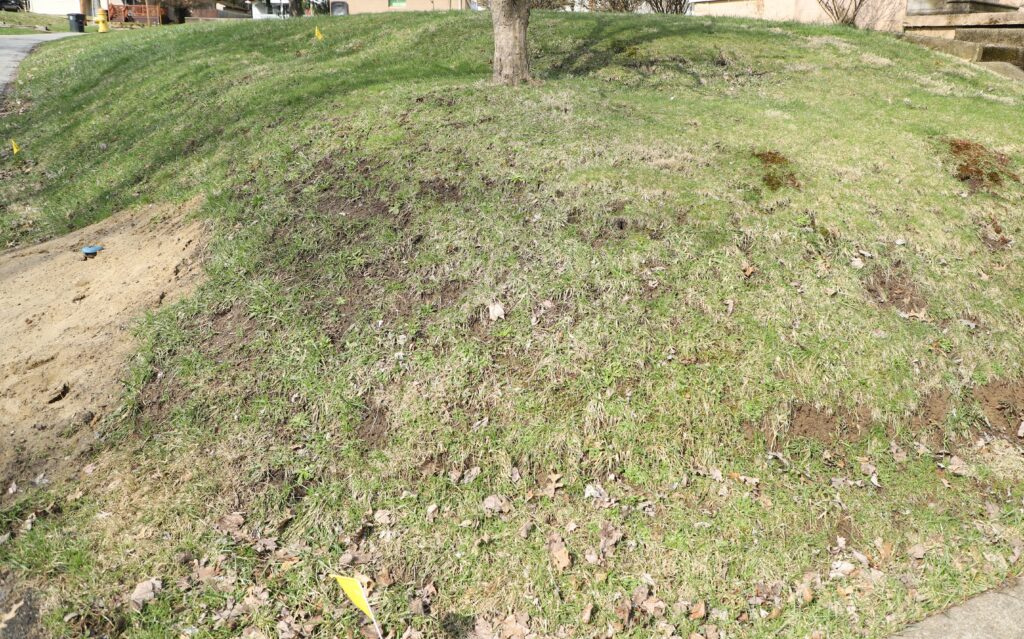
If you read the first article in our Summer Lawn Survival Series, you already know that brown grass is a symptom—not a diagnosis.
Now it’s time to narrow down what’s actually affecting your lawn.
Heat stress, insect damage, and lawn diseases can all leave behind similar-looking brown patches. The good news is that your lawn usually provides clues. You just need to know where to look.
Start with the guide below. Find the description that best matches what you’re seeing, then jump to that section to learn more.
| If You Notice… | Consider… |
| Grass gradually turned brown during extended hot, dry weather and improves after rainfall | Heat Stress & Dormancy |
| Grass pulls up easily like loose carpet, or wildlife is digging in your lawn | White Grubs |
| Brown patches continue spreading even after watering, especially near driveways or sidewalks | Chinch Bugs |
| Circular or ring-shaped brown patches that continue expanding | Lawn Disease |
| You’re seeing multiple symptoms or aren’t sure what’s causing the problem | When to Call Grass Master |
Heat Stress & Dormancy
Extended periods of high temperatures and limited rainfall can cause cool season grasses to enter dormancy. During this time, your lawn conserves energy by turning tan or light brown.
Signs you’re likely dealing with heat stress:
- Browning appeared during a hot, dry stretch.
- Most of the lawn is affected rather than isolated patches.
- Grass begins recovering after cooler weather or consistent rainfall.
- There are no obvious signs of insects or disease.
The biggest mistake homeowners make is assuming more water will immediately solve the problem. While proper watering is important, overwatering stressed turf can create new problems, including fungal disease.
White Grubs
White grubs feed on your lawn’s root system, preventing the grass from absorbing the water and nutrients it needs.
One of the easiest ways to identify grub damage is the tug test.
Gently grab a handful of brown grass and pull upward. If it lifts easily from the soil, almost like loose carpet, grubs may have damaged the roots.
You may also notice:
- Birds, skunks, or raccoons digging in the lawn
- Soft, spongy-feeling turf
- Brown patches that continue getting worse despite watering
Unlike drought stress, watering won’t solve a grub problem because the roots have already been compromised.
Chinch Bugs
Chinch bugs feed directly on grass blades while injecting toxins that interfere with the plant’s ability to transport water.
The result is a lawn that looks thirsty—even when it isn’t.
Look for these clues:
- Damage begins in the hottest, sunniest areas of the yard.
- Brown patches continue expanding despite watering.
- Damage is often found near driveways, sidewalks, patios, or other heat-reflecting surfaces.
Because chinch bug damage closely resembles drought stress, it’s one of the easiest lawn problems to misdiagnose.
Lawn Disease
Hot, humid weather creates ideal conditions for several common lawn diseases.
Unlike insect damage, lawn diseases often produce recognizable patterns that become more noticeable over time.
Watch for:
- Circular or ring-shaped patches
- Small brown spots that gradually merge together
- Brown areas that continue expanding despite proper watering
Many different diseases share similar symptoms, so identifying the exact disease isn’t always necessary for homeowners. The important thing is recognizing when the issue is likely fungal rather than environmental or insect-related.
When to Call Grass Master
Sometimes the signs clearly point to one issue.
Other times, several problems can affect a lawn at once.
Heat-stressed turf, for example, is often more susceptible to insect damage and disease, making diagnosis even more challenging.
For more than 45 years, Grass Master has helped Northeast Ohio homeowners identify the true cause of lawn problems before recommending treatment. Rather than guessing, we evaluate your lawn as a whole so you can feel confident you’re taking the right next step.
If your lawn isn’t recovering—or you’re still unsure what’s causing the damage—contact Grass Master to schedule a professional lawn evaluation.
What’s Next?
Now that you know how to identify the most common causes of summer lawn damage, the next step is learning how to prevent many of these problems before they start.
In the final article of our Summer Lawn Survival Series, we’ll cover proper watering, mowing, soil health, and other practices that help build a stronger, healthier lawn.
Continue Reading: Why Watering Isn’t Always the Answer
